For decades, processing steel thicker than 80mm (3.15 inches) was the exclusive domain of oxy-fuel torches and massive, slow-moving band saws. These traditional methods were tolerated only because there was no alternative. Oxy-fuel cutting leaves a massive Heat-Affected Zone (HAZ) and a jagged, oxidized edge that requires hours of secondary milling. Mechanical sawing, while cleaner, is agonizingly slow and limited to straight lines.
The introduction of the 30kW fiber laser has shattered these limitations. By channeling 30,000 watts of concentrated light through high-density optics, we are no longer just “burning” metal—we are performing precision optical machining on a massive scale.
This guide explores the structural engineering and optical physics required to dominate the laser cutting machines 80mm and thicker market.
The most significant bottleneck in thick plate cutting isn’t the cut itself; it’s the initial pierce.
The Legacy Struggle: Even a high-performance 12000w fiber laser cutting machine for metal requires a multi-stage “pecker” piercing routine to get through 80mm, often taking 30–60 seconds while risking a molten blowout.
The 30kW Breakthrough: With 30,000 watts of raw power, the energy density is so high that the laser can perform a “Flash Pierce.” By using frequency-modulated pulses and high-pressure assist gas, a 30kW unit can punch through 80mm solid steel in a fraction of the time, maintaining a perfectly vertical entry hole that protects the nozzle from back-spatter.
When cutting 80mm steel, the kerf (the width of the cut) becomes a fluid dynamics problem. If the kerf is too narrow, the molten slag cannot be ejected, and it will weld the plate back together behind the laser head.
Modern 30kW cutting heads utilize high-speed oscillating mirrors (Wobble Technology) to create a dynamic beam.
Width Control: The laser doesn’t just travel in a straight line; it oscillates in a microscopic “ring” pattern.
Slag Ejection: This wider path allows the low-pressure Oxygen assist gas to reach the very bottom of the 80mm trench, creating a powerful “flushing” effect that leaves the bottom edge of the plate as clean as the top.
A standard 3.0m x 1.5m sheet of 80mm carbon steel weighs approximately 2,826 kg (6,230 lbs). This massive weight introduces severe mechanical challenges for the machine frame.
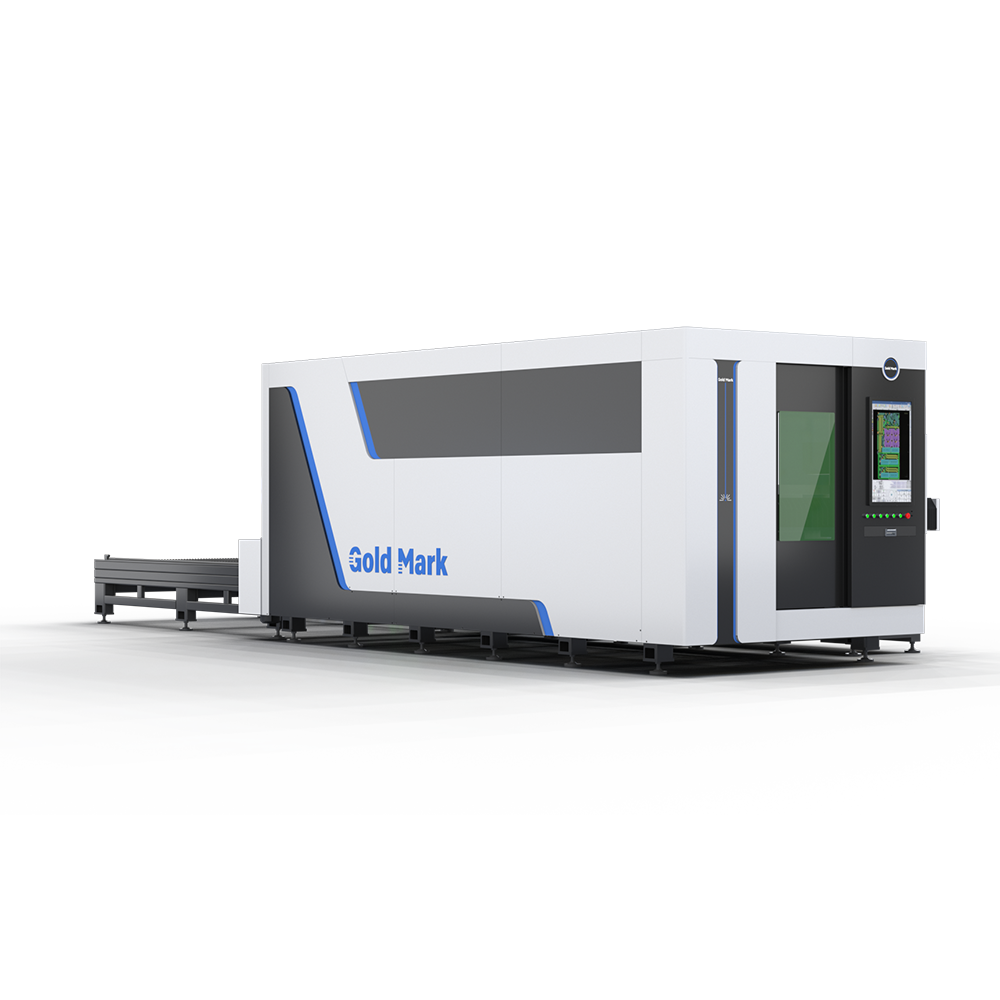
While dual-pallet exchange systems are great for 2mm aluminum, they are structurally insufficient for 80mm plate. The high-capacity single table laser cutting machine is the industry-standard choice for 30kW applications for two reasons:
Structural Integrity: A single, reinforced static bed does not rely on hydraulic lifters or chain drives that can buckle under a 3-ton load. It provides a rock-solid foundation for micron-level accuracy.
Thermal Sink Capacity: The massive volume of molten slag generated by a 30kW beam can warp thin-framed machines. A heavy-duty single-table frame is built with thick, stress-relieved steel plates designed to absorb and dissipate this thermal energy without losing alignment.
Profitability in heavy fabrication is about floor-space efficiency. Whether your facility refers to it as a 3015 metal laser cutting machine or a 1530 laser cutting machine, this footprint provides the most versatile work envelope for the mid-sized job shop.
By housing 30kW of power in this standardized format, shops can process anything from a standard 20mm baseplate to an 80mm structural bridge component on the same machine. This versatility allows you to bid on diverse contracts, from renewable energy infrastructure to heavy maritime equipment, without needing a massive shipyard gantry.
The transition to 30kW power is the final nail in the coffin for traditional oxy-fuel and mechanical sawing of heavy plates. By combining a 3015 metal laser cutting machine‘s agility with 30,000 watts of “Flash Pierce” capability, you are future-proofing your business against the rising costs of labor and energy.
In 2026, the competitive advantage belongs to those who can produce heavy structural parts with the same speed and precision that was once reserved for thin sheet metal.
 GM-F Series
 GM-E Series
 GM-EP Series
 GM-FL Series
 GM-FP Series
 GM-H Series
 GM-G Series
 GM-GP Series
 GM-1390S Series
 GM-FR Series
 GM-EPL Series
 GM-TS Series
 GM-T2 Series
 GM-T2S Series
 GM-T2L Series
 GM-T3 Series
 GM-T3L Series
 GM-T4 Series
 GM-FT Series
 GM-FTE Series
 GM-FTP Series
 GM-W Series
 GM-WFA Series
 GM-WA Series
 GM-C Series
 GM-CP Series
 GM-EPB Series
 GM-HPB Series
 GM-TPBS Series
 GM-TPB Series