When a fabrication shop owner decides to bring laser cutting in-house, they are immediately confronted by an arms race of wattage. Marketing brochures push 12kW, 20kW, and even 40kW systems as the “new normal.” While those behemoths are necessary for heavy industrial steel service centers, they represent a massive over-capitalization for the average custom fabricator, HVAC contractor, or architectural metalworker.
The reality is that 80% of all sheet metal processed globally is under 10mm (roughly 3/8 inch) thick. To dominate this core market, you do not need an overpriced monster; you need a reliable, efficient, and perfectly sized tool. The 3000W, open-bed cnc laser cutter 3m*1.5m provides exactly that. Let’s break down the engineering and economic realities of this foundational machine.
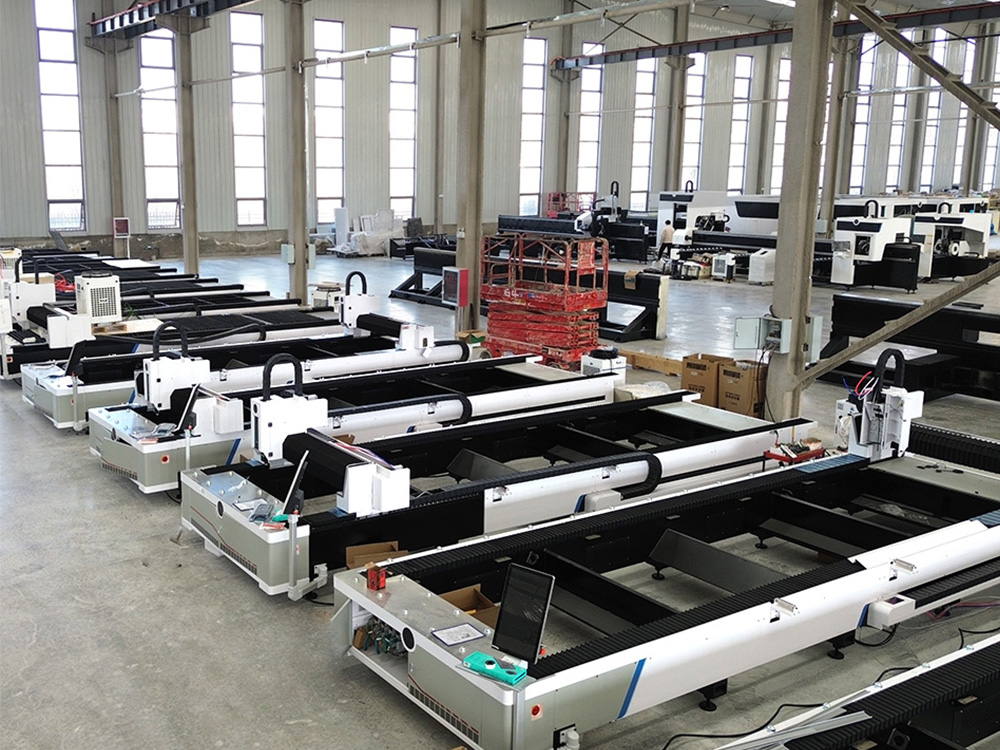
Before discussing wattage, we must discuss geometry. The “3015″ designation refers to the machine’s working area: 3.0 meters long by 1.5 meters wide.
Why is the cnc laser cutter 3m*1.5m format the undisputed king of the job shop?
Zero Material Waste: Metal service centers globally ship standard sheet metal in 10-foot by 5-foot dimensions (exactly 3m x 1.5m). This machine bed is perfectly sized to accept a full, uncut sheet, eliminating the need for prep-shearing.
Floor Space Efficiency: By utilizing an “Open Type” architecture—without the massive automated shuttle tables and full-roof sheet metal enclosures—this footprint fits cleanly into the corner of a growing shop, preserving your valuable floor space for welding bays and assembly.
Understanding your power needs is the secret to maximizing Return on Investment (ROI).
A 3000W (3kW) source is a highly efficient optical engine. For materials up to 8mm carbon steel or 5mm aluminum, it cuts with razor-sharp precision and excellent speed. It requires less electricity and consumes less assist gas than its higher-power siblings, keeping your hourly operating costs incredibly low.
If your daily production consists of long runs of 10mm to 16mm steel where speed is the only metric that matters, then stepping up to a fiber laser cutting machine 6kw is a mathematically sound decision. The 6kW will process mid-gauge plates much faster. However, if you are a high-mix, low-volume shop making custom brackets, signs, and thin enclosures, the 3kW will cut the exact same parts with the exact same edge quality, saving you tens of thousands of dollars on the initial purchase price.
As a CTO, my job is to protect our clients from bad investments by providing candid, scientifically accurate advice. When you invest in your first lazer cutter machine, you must know its true limitations.
Can a 3000W laser operate as a laser cutter machine 30mm solution? Absolutely not. * The Physics: Cleanly severing 30mm (over 1 inch) of solid steel requires immense thermal density and massive oxygen flow. If you try to push a 3kW machine through 30mm plate, you will lose the cut, destroy the nozzle, and scrap the material.
The Reality: To be a true laser cutter machine 30mm, you must invest in a 12kW or 15kW source at minimum. The 3000W is a sheet metal master, not a heavy-plate bulldozer.
Another dangerous myth is the idea of a universal machine. Fabricators often ask if they can use their new metal laser as a laser cutting machine for carbon fiber.
The Chemistry: Carbon fiber is a composite of high-heat carbon strands embedded in low-heat epoxy resin. A standard continuous-wave 1-micron fiber laser will easily vaporize the carbon, but the intense, spreading heat will uncontrollably burn and melt the surrounding epoxy, destroying the part’s structural integrity.
The Reality: There is no such thing as a standard fiber laser cutting machine for carbon fiber. Processing aerospace composites requires specialized “Cold Cutting” Ultra-Short Pulse (USP) lasers or abrasive waterjets. Our 3000W laser is a precision tool engineered specifically for metallic alloys.
Entering the laser market shouldn’t require hiring a team of optical physicists. The modern 3000W platform is designed for rapid onboarding.
Just because a machine is “entry-level” in power does not mean it is entry-level in intelligence.
Autofocus Cutting Heads: Our 3kW systems feature motorized lenses. When the operator switches from cutting 1mm aluminum to 6mm steel, the CNC software automatically adjusts the focal depth inside the head.
Capacitive Height Tracking: The laser head “floats” a fraction of a millimeter above the metal. If the steel sheet is warped, the sensor detects it instantly and adjusts the Z-axis in real-time, preventing nozzle crashes and ensuring a flawless, dross-free edge.
When you begin searching for a cnc laser cutter for sale, the hidden costs can make or break your business.
Lower Capital Risk: Financing a 3kW open machine is vastly more manageable than taking out a massive loan for an enclosed 10kW system. It allows a shop to internalize their laser cutting, stop paying outsourced vendor margins, and instantly improve their cash flow.
Cheaper Infrastructure: A 3000W machine can often run on your building’s existing industrial power supply and standard shop air compressors. Higher wattage machines often require expensive electrical substation upgrades and massive, high-pressure gas storage tanks.
In 2026, transitioning to fiber laser technology is not a luxury; it is a survival requirement. However, buying more machine than you need is a quick way to bankrupt a growing shop.
The 3000W open 3015 platform is the perfect synthesis of capability and affordability. It gives you the speed to compete, the precision to impress your most demanding clients, and the operational simplicity to start making money on day one. When you are looking for a cnc laser cutter for sale, look past the vanity metrics of extreme wattage and focus on what will actually drive your profitability.
At Goldmark Laser, our GM-E 3000W systems utilize the exact same rigid steel frames and advanced software as our industrial behemoths. You get premium engineering scaled perfectly to your business model.
 GM-F Series
 GM-E Series
 GM-EP Series
 GM-FL Series
 GM-FP Series
 GM-H Series
 GM-G Series
 GM-GP Series
 GM-1390S Series
 GM-FR Series
 GM-EPL Series
 GM-TS Series
 GM-T2 Series
 GM-T2S Series
 GM-T2L Series
 GM-T3 Series
 GM-T3L Series
 GM-T4 Series
 GM-FT Series
 GM-FTE Series
 GM-FTP Series
 GM-W Series
 GM-WFA Series
 GM-WA Series
 GM-C Series
 GM-CP Series
 GM-EPB Series
 GM-HPB Series
 GM-TPBS Series
 GM-TPB Series